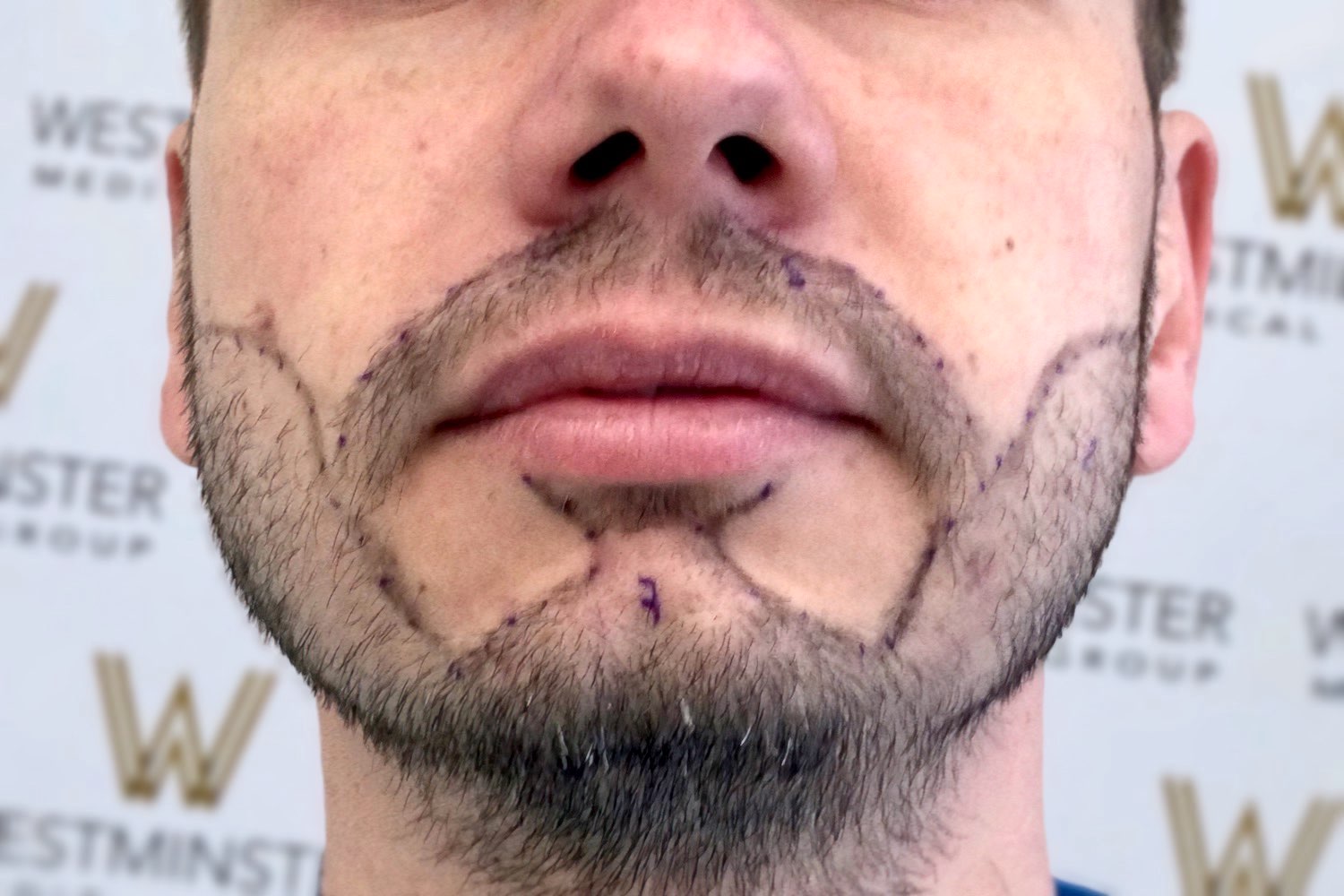
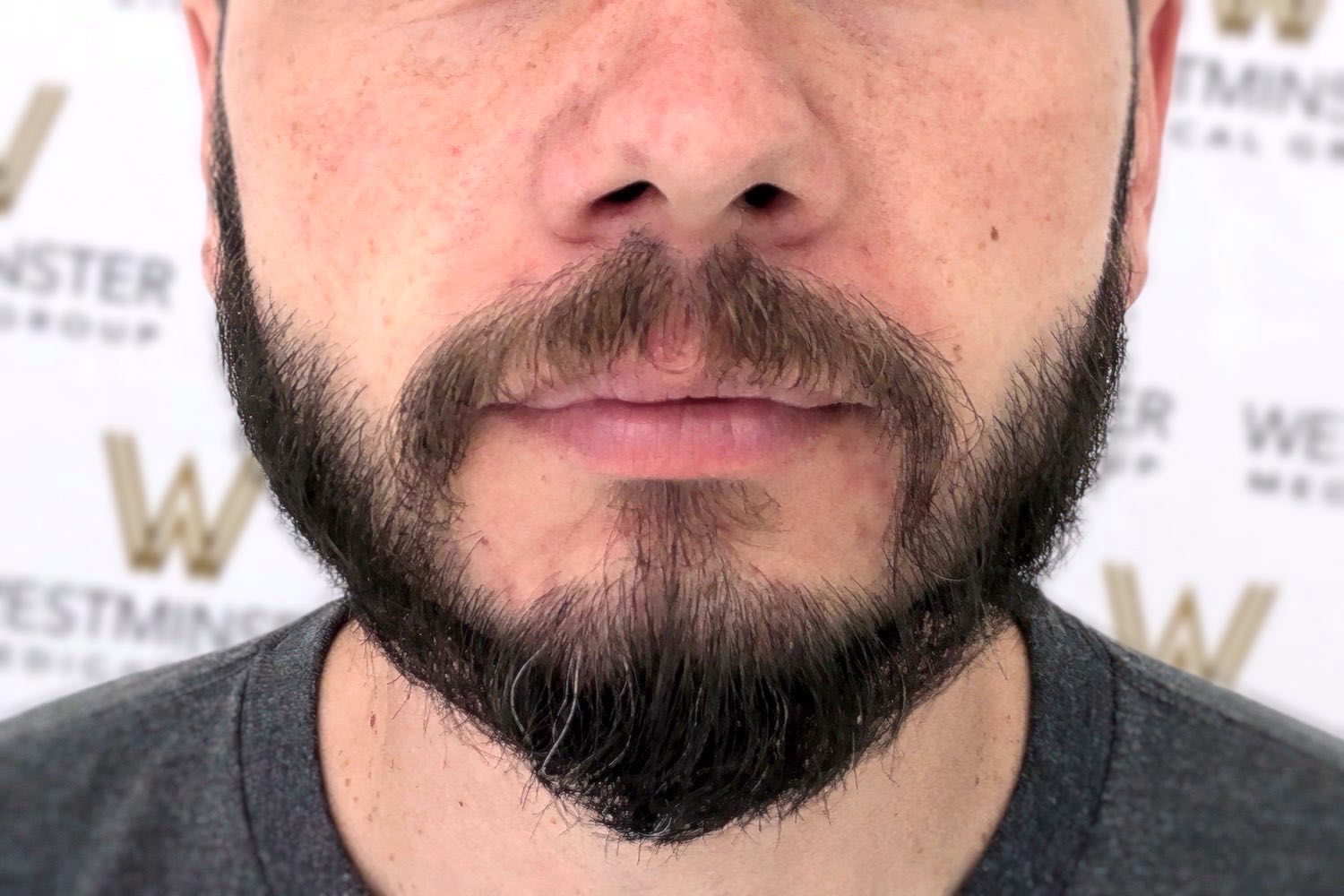
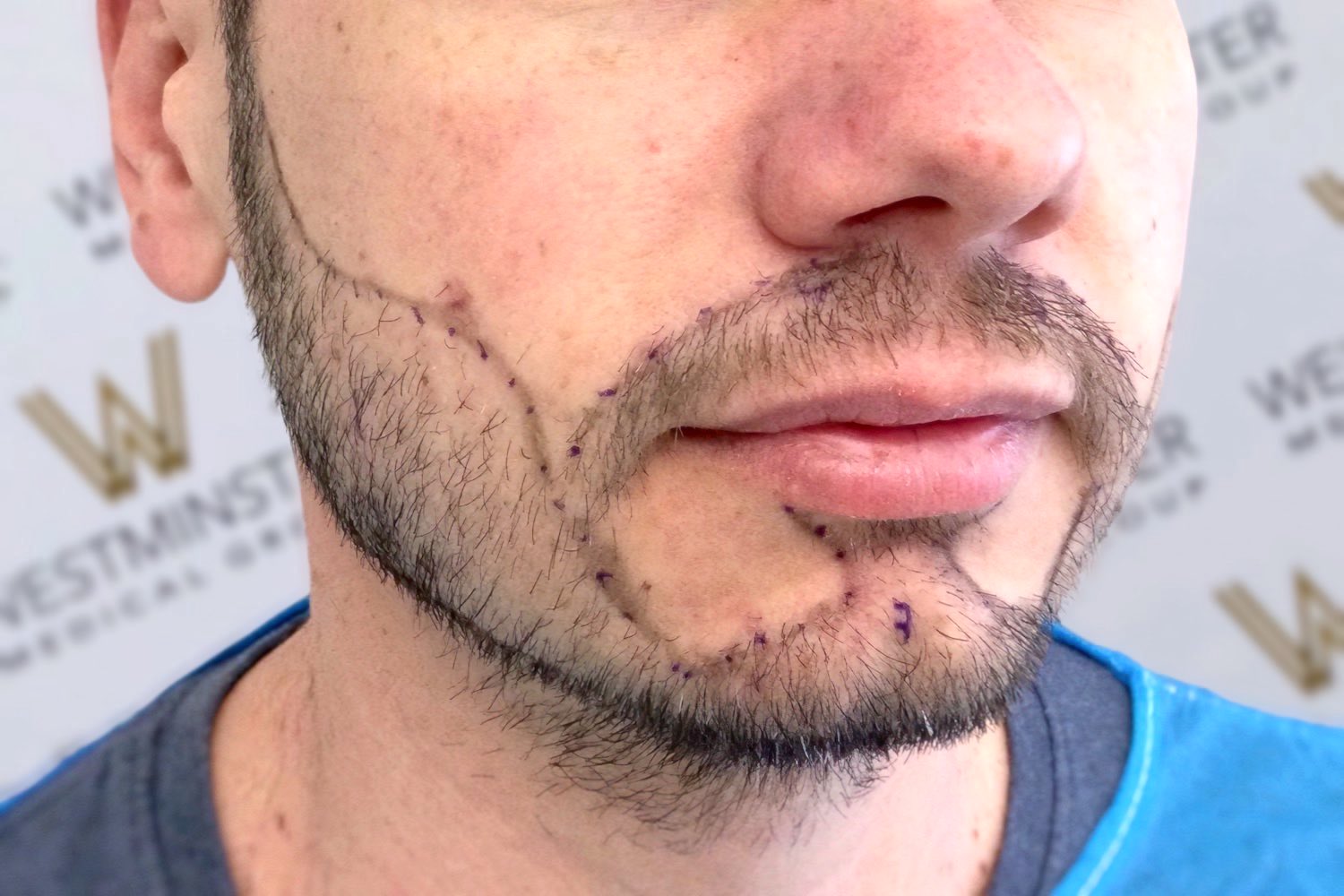
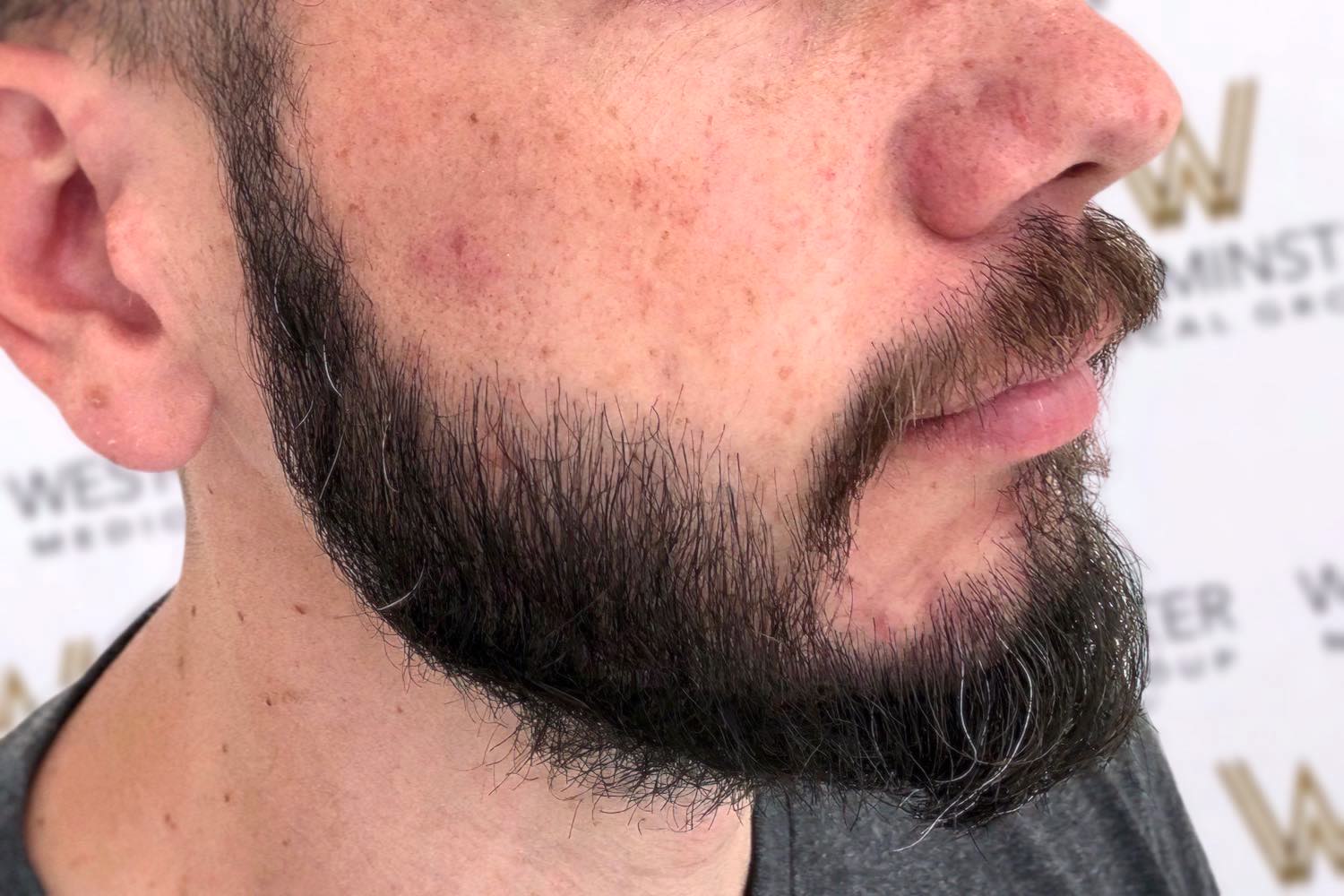
What is a Beard Transplant?
A beard transplant involves harvesting healthy hair follicles from the back or sides of the scalp (donor area), where the hair is genetically resistant to loss and implanting them into the beard region. The most common method is Follicular Unit Extraction (FUE), which extracts individual follicles without leaving a linear scar, making it ideal for facial procedures where scarring must be undetectable.
The procedure is tailored to each patient: some need just a few hundred grafts to fill patches or enhance the moustache/goatee, while others require 1,500-4,000+ grafts for a full beard restoration. Surgeons meticulously design the hairline, density, and growth direction to match the patient’s natural facial hair pattern for authentic results.
Beard Transplant UK Costs
Beard transplant costs in the UK typically range from £3,000 to £7,000, with many procedures falling between £4,000 and £6,000 depending on the extent of the treatment. Factors influencing price include:
-
- Number of grafts required (fewer grafts for patch-filling vs. full beard construction)
-
- Technique (FUE is standard; advanced variations may cost more)
-
- Clinic location and surgeon expertise (Harley Street clinics in London often reflect premium standards)
-
- Inclusion of consultations, aftercare, and follow-ups
At reputable UK clinics like WMG, pricing is transparent and personalised following a consultation. While some lower quotes exist, patients are advised to prioritise surgeon-led procedures over volume-based deals to ensure quality and safety. Finance options are often available. Compared to scalp hair transplants, beard transplant procedures can sometimes be more cost-effective due to smaller treatment areas, though precision work on the face demands high skill.
The Beard Transplant Procedure
Beard transplants are performed as an outpatient procedure under local anaesthesia, typically lasting 4–8 hours depending on graft numbers. Here’s a step-by-step overview:
-
- Consultation and Planning: A detailed assessment with the surgeon determines donor hair suitability, designs the beard shape, and discusses expectations.
-
- Donor Area Preparation: Hair at the back of the scalp is trimmed (or sometimes left long for no-shave options).
-
- Follicle Extraction: Using FUE, individual follicular units are gently extracted with a small punch tool. This leaves tiny, dot-like marks that heal quickly and are virtually invisible.
-
- Recipient Site Creation: Tiny incisions are made in the beard area at precise angles and directions to mimic natural growth.
-
- Implantation: Extracted grafts are carefully placed one by one. The process emphasises artistry to achieve even density and a natural flow.
Patients remain comfortable throughout and can return home the same day. No general anaesthesia or overnight hospital stay is required.

Recovery and Aftercare
Recovery from a beard transplant is generally straightforward with minimal downtime:
-
- Days 1-7: Mild swelling, redness, and small scabs may appear around the transplanted sites and donor area. These are normal and usually subside within a week. Avoid touching or shaving the area; follow gentle washing instructions provided by the clinic.
-
- Week 2: Most patients feel comfortable returning to work and social activities. Scabs flake off naturally.
-
- Weeks 2-4: Transplanted hairs may shed (a normal “shock loss” phase). This is temporary-the follicles remain intact.
-
- Months 3-4: New growth typically begins to emerge.
-
- Months 6-12: Beard density improves significantly, with final, mature results visible around 9-12 months (sometimes up to 18 months for full thickness).
Post-operative care includes avoiding strenuous exercise, direct sun exposure, and smoking for the first few weeks. We provide comprehensive aftercare guidance and follow-up support to optimise healing and results. Most patients report little to no pain, managed with over-the-counter medication if needed.
Achieving Natural-Looking Results
When performed by experienced surgeons, beard transplants produce highly natural outcomes that are virtually indistinguishable from native facial hair. Key to success is the artistic placement of grafts to follow the unique whorls and angles of beard growth, combined with selecting hairs of appropriate texture and colour from the donor site.
Before-and-after cases at leading UK clinics show transformative yet subtle improvements-from filling patchy cheeks to creating a defined jawline or fuller goatee. Results are permanent, as the transplanted follicles retain their resistance to hair loss. Patient satisfaction is high when realistic expectations are set during consultation.
Is a Beard Transplant Right for You?
Beard transplants are rising in demand among younger men in the UK who want a confident, masculine appearance without relying on temporary solutions like minoxidil or fillers. Ideal candidates have sufficient donor hair and good overall health.
If you’re considering a beard transplant in London or the UK, book a no-obligation consultation with a specialist clinic. At Westminster Medical Group on Harley Street, you’ll receive personalised advice from GMC-registered surgeons focused on natural, long-lasting results.
Contact WMG today to discuss your options and take the first step toward the beard you’ve always wanted. Results speak for themselves and many patients report boosted confidence and a renewed sense of self after their procedure.