Hair Transplant for Crown Balding: Best Techniques and Expected Results in the UK
Crown balding, also known as vertex thinning or loss in the top/back area of the scalp, is a common concern for many men experiencing male pattern baldness. This area often shows up as a circular or expanding patch, influenced by genetics and hormones (androgenetic alopecia). A crown hair transplant can effectively restore density and create a more natural, fuller appearance when performed by experienced surgeons.
At Westminster Medical Group (WMG) London on Harley Street, we specialise in tailored hair restoration solutions, including crown balding hair transplants, using advanced techniques to achieve natural-looking results with minimal downtime.
Why the Crown Area Is Challenging for Hair Transplants
The crown (vertex) differs from the hairline or frontal areas due to its unique “swirl” or whorl pattern, where hairs naturally radiate outward in multiple directions. This makes the area more prone to appearing “see-through” if density is insufficient, as light reflects differently on the scalp.
-
- Higher graft needs: Achieving good coverage often requires 45–50 grafts per cm² or more, compared to other zones. Typical crown procedures use 1,500-3,000+ grafts, depending on the size of the balding patch and donor hair quality.
-
- Future-proofing: Surgeons must consider ongoing hair loss. For younger patients (under 45), stabilising loss with medication (e.g., finasteride or minoxidil) is often recommended before surgery, as progression could widen the bald area.
-
- Norwood scale relevance: Crown transplants suit Norwood 3 Vertex to 5–6 stages, where donor hair from the back/sides remains sufficient. Advanced cases (Norwood 6-7) may need careful planning or combined approaches.
Proper planning, including recreating the natural swirl direction and angle of implantation, is essential for seamless blending with existing hair.
Best Techniques for Crown Hair Transplants in the UK
Modern UK clinics predominantly use minimally invasive methods. Follicular Unit Extraction (FUE) is the gold standard for crown balding transplants due to its precision, lack of linear scarring, and suitability for the vertex area.
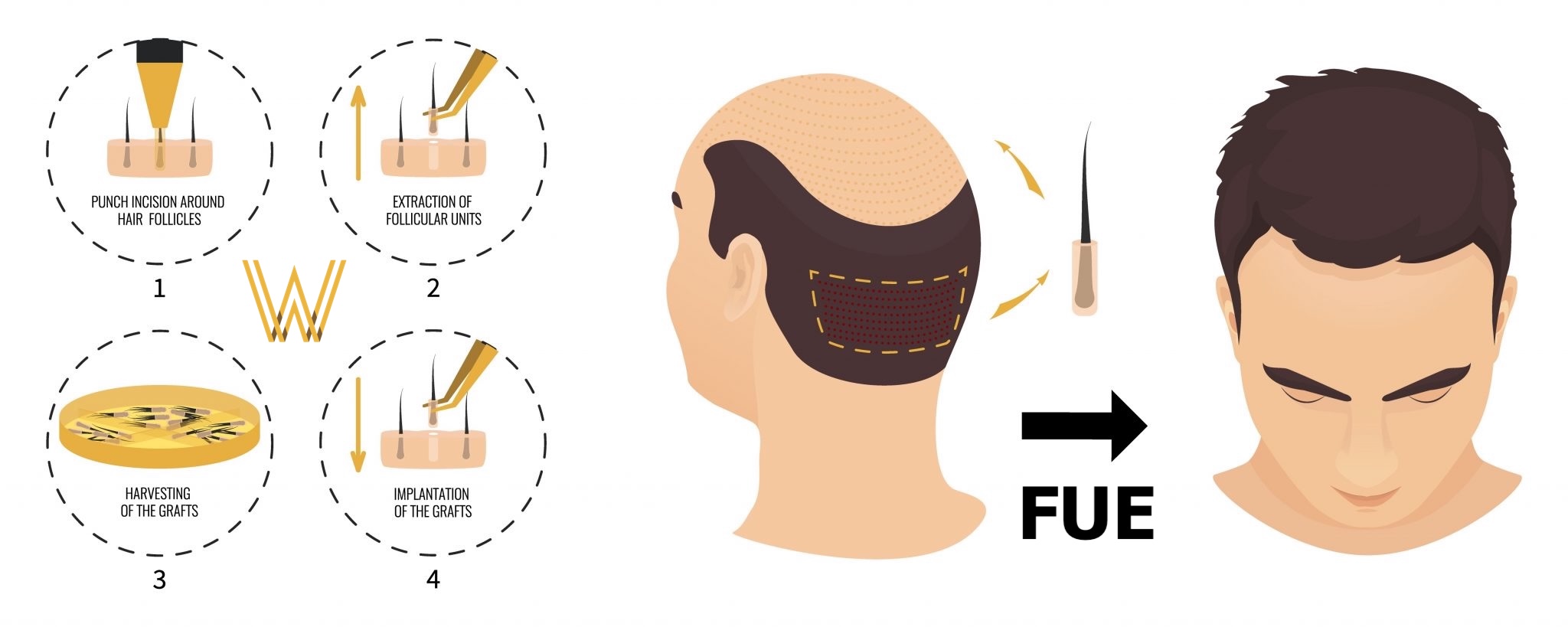
1. FUE (Follicular Unit Extraction)
-
- Individual hair follicles (grafts) are extracted from the donor area (back and sides of the head) using the WAW Duo or UGraft Zeus FUE systems for precision harvesting.
-
- Grafts are then implanted into the crown at the correct angle and density.
-
- Advantages: Minimal scarring (tiny dot scars that are virtually invisible with short hair), faster recovery, high graft survival (90-95%+ in skilled hands), and natural results. Ideal for crown work as it allows precise placement around the existing swirl of hair.
-
- Sapphire blades for more detailed and smoother incisions, best for detail oriented procedures.
-
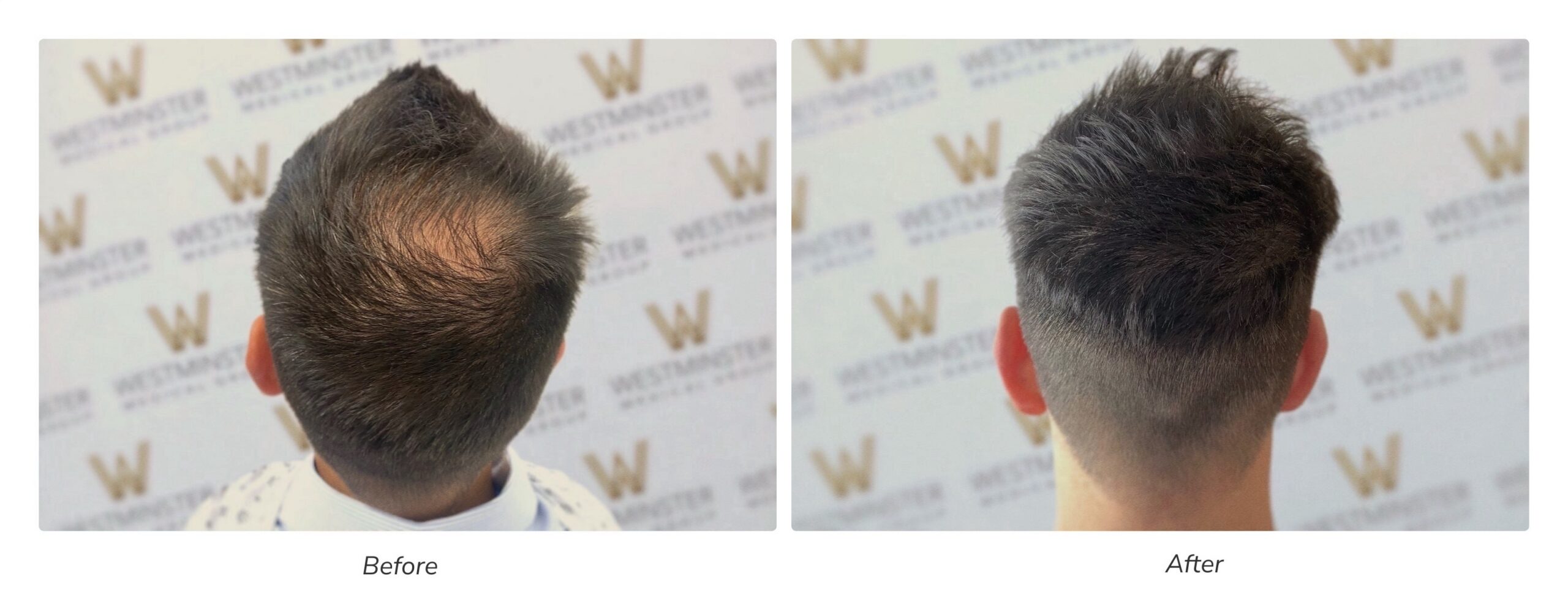
- At WMG London, we perform FUE via state-of-the-art extraction systems for optimal outcomes, as seen in our crown hair transplant before-and-after gallery (e.g., cases with 700-1,500 grafts showing significant density improvement).
2. FUT (Follicular Unit Transplantation / Strip Method)
-
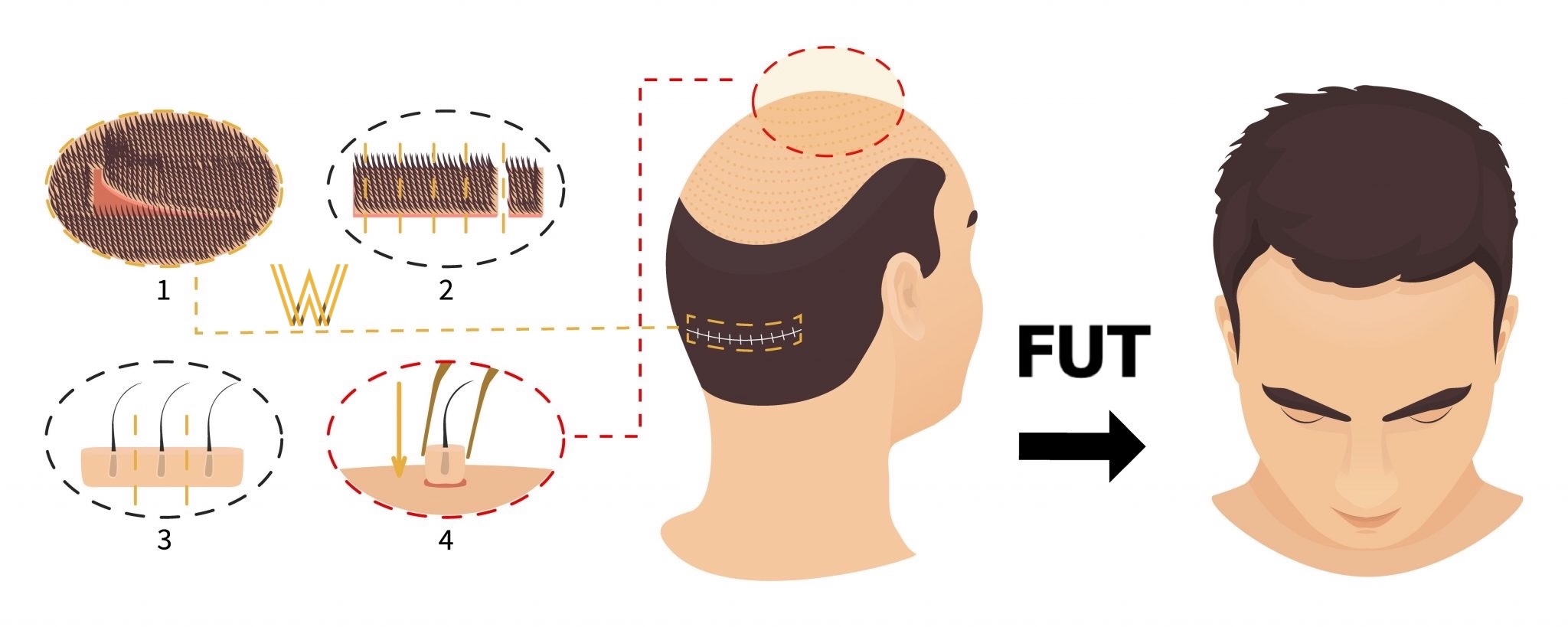
- Involves removing a thin strip of skin from the donor area, then dissecting it into individual grafts.
-
- Advantages: Allows for a higher number of grafts in one session; useful for extensive crown balding when combined with FUE.
-
- Drawbacks: Leaves a linear scar (hidden by longer hair longer than 2cm), longer recovery. Less commonly used today as a standalone for crowns but may feature in hybrid approaches.
Success depends heavily on the surgeon’s experience in handling the crown’s unique swirl and density requirements when undergoing a hair transplant procedure, so always make sure your surgeon is experienced.
WMG Approach: We assess each patient individually via consultation (including online options) to recommend the best technique, often FUE for its versatility in crown restoration.
Expected Results and Timeline for Crown Hair Transplants
Results from a crown hair transplant are permanent, as donor follicles are resistant to balding. However, patience is key-the crown typically matures more slowly than the hairline.
Typical Growth Timeline
-
- Weeks 1-4: Scabs heal; transplanted hairs may shed (normal “shock loss”).
-
- Months 3-4: Early sprouts begin; initial fine hairs appear.
-
- Months 6-9: Noticeable improvement in density; hair thickens.
-
- Months 12-15: Significant coverage; most patients see good blending.
-
- Months 18-20: Full, mature results.
By 12-18 months, most patients enjoy 90-95%+ graft survival and natural-looking fullness, assuming proper post-op care is adhered to.
Realistic Expectations:
-
- Excellent coverage and reduced visibility of the bald patch.
-
- Natural swirl recreation for undetectable results.
-
- Maintenance with medication can protect surrounding native hair and prolong overall results.
-
- Some patients opt for a second session for even denser coverage if the area is large.
View WMG London’s crown hair transplant before-and-after results for real patient transformations using FUE, including cases with varying graft numbers showing progressive filling of the vertex.
Recovery and Aftercare in the UK
-
- Downtime: Most return to work within 7–10 days. Avoid strenuous activity for 2–4 weeks.
-
- Post-op: Follow instructions on washing, avoiding sun/smoking, and using prescribed sprays or PRP if recommended.
-
- UK clinics like WMG are CQC-regulated, ensuring high safety standards.
Is a Crown Hair Transplant Right for You?
Ideal candidates have stable hair loss, sufficient donor hair, and realistic expectations. A consultation assesses your Norwood stage, donor quality, and goals.
Here at Westminster Medical Group, our crown hair restoration specialists experienced in crown hair transplant procedures will provide you with a personalised plan. We also offer alternate treatments like Scalp Micropigmentation (SMP) for enhanced density in some cases as a non-surgical option.
Contact us today for a free consultation or online assessment to discuss your crown balding transplant options, techniques, costs, and expected results. Regain confidence with natural, long-lasting hair restoration tailored to you.